
Say a loan gets approved at 4:45pm on a Friday. At a lender with tight LOS–core banking integration, the account exists and funds are already moving before anyone leaves the office. At a lender without it, someone’s got two systems open, copying numbers by hand, hoping nothing gets fat-fingered before Monday.
That gap between a loan origination system (LOS) and the core banking system (CBS) that actually holds the accounts, the ledgers, the money is where a lot of lending operations quietly lose time, accuracy, and customer trust. Get the integration right and a loan can go from approved to funded in minutes. Get it wrong, or skip it entirely, and you’re stuck re-keying data, chasing mismatched records, and explaining to a customer why their “approved” loan hasn’t shown up anywhere yet.
Here’s how that connection actually works, the different ways to build it, and what tends to go wrong.
What Is the Relationship Between an LOS and Core Banking Software?
Think of the LOS as everything that happens before a loan is real, and the custom CBS as what happens once it is. The origination system covers end-to-end loan process on the front end the application, the documents, the credit checks, underwriting, approval, the offer. The core banking system takes over the moment that offer gets accepted: it opens the account, keeps the ledger, sends the money out, and tracks every payment that comes back in.
Without a real connection between the two, someone becomes the integration layer usually a loan ops person copying data from one screen into another. That’s slow, and it’s exactly the kind of manual step where mistakes creep in. Wire the systems together properly and the LOS just feeds clean, validated loan data straight into the bank’s core systems, no re-typing required.
What Data Actually Moves Between the Two Systems?
It’s not a one-time “create an account” trigger. Over the life of a loan, data moves in both directions:
- Customer and KYC details identity info, verification status, risk flags flow into the CBS’s customer master.
- Loan terms principal, rate, tenure, repayment schedule, any collateral get written into the account setup.
- The underwriting decision itself, along with any conditions attached to it.
- Disbursement instructions once everything’s cleared.
- Going the other way, repayment status, prepayments, and delinquency flags flow back from the CBS into the LOS, so origination and servicing teams aren’t working off stale information.
That last one gets overlooked a lot. Teams build the forward flow application to account and forget that origination, collections, and customer service all need visibility into what happens after the money goes out.
What Integration Methods Are Commonly Used?
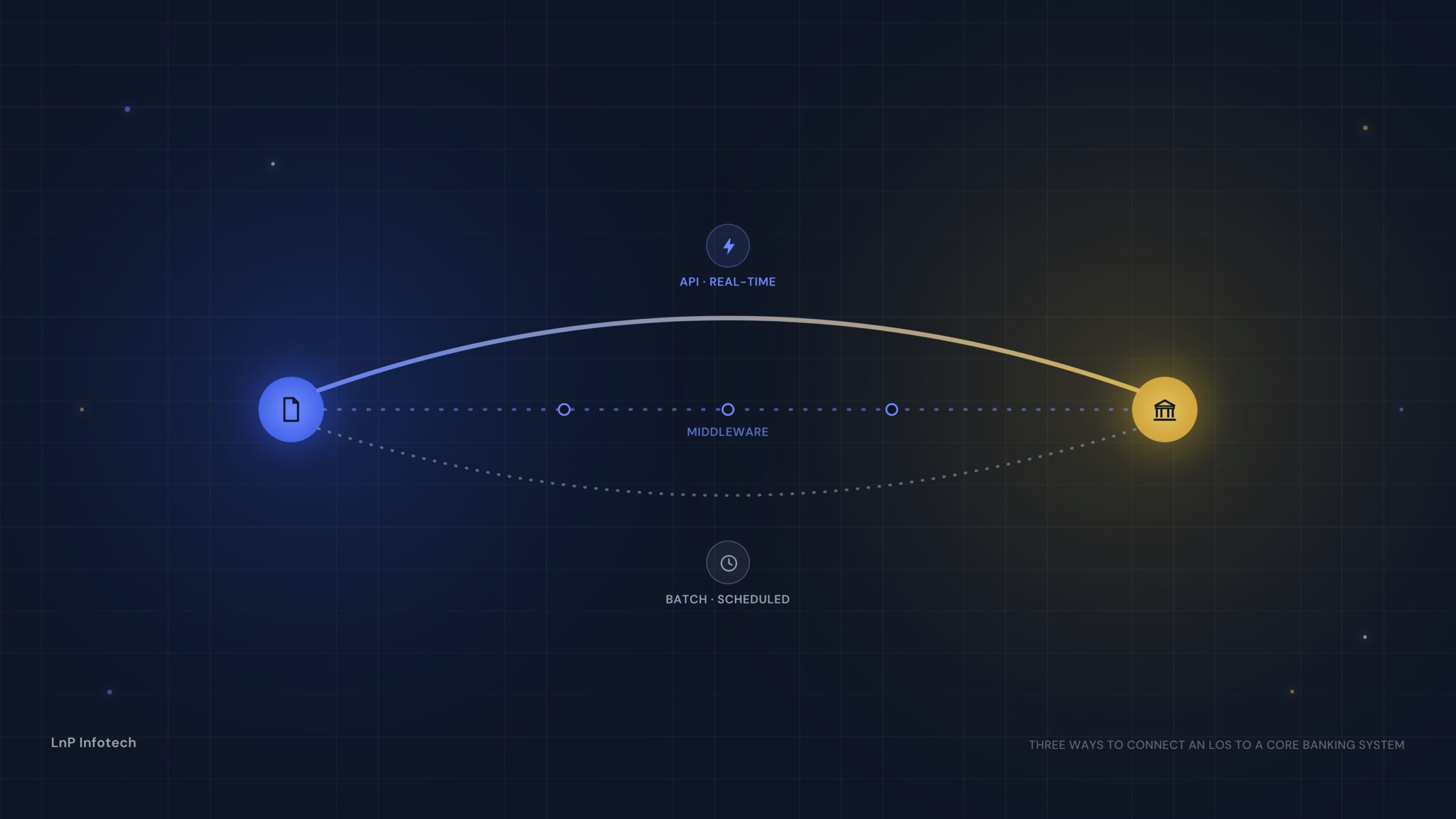
There are three common patterns, and which one you end up with often depends less on preference and more on how old your core banking platform is.
API-Based Integration
If your core banking system exposes proper REST or SOAP APIs most modern platforms do this is the one you want. The LOS can push data and pull status back in near real time, so account creation, disbursement, and status checks all happen without anyone touching a keyboard in between.
Middleware or an Enterprise Service Bus (ESB)
Bigger institutions running several systems core banking, CRM, document management, compliance often put a middleware layer in between rather than wiring each system directly to every other one. It translates formats, queues messages, retries failed calls. More moving parts, but it saves you from building point-to-point connections that turn into spaghetti over time.
Batch File Integration
Plenty of banks, especially ones still running mainframe-based cores, don’t support real-time calls at all. Data moves instead as files flat files, XML, fixed-width on a schedule, often overnight or a few times a day. It works, but there’s a lag baked in: approve a loan at 2pm and the account might not exist in the core system until that night’s batch run finishes.
Is Real-Time or Batch Integration Better?
Honestly, it depends on what you’re lending and how impatient your customers are.
Real-time makes sense for anything where people expect money same-day personal loans, BNPL, instant-approval products. If your marketing promises “funds in minutes,” your integration architecture has to actually deliver that, which rules out batch.
Batch can still be perfectly fine for products that were never fast to begin with. A mortgage or home-equity loan already takes weeks to close, so a few hours of lag between approval and account activation isn’t the thing customers complain about.
Most institutions land somewhere in between real-time for the pieces that touch the customer directly, like status updates and decisions, and batch for the back-office reconciliation and ledger posting nobody’s staring at a screen waiting for.
What Are the Biggest Technical Challenges in LOS–Core Banking Integration?
A few problems come up again and again.
Data formats rarely match. Older core banking systems often use proprietary structures that don’t map cleanly onto a modern LOS schema, so you end up needing a translation layer just to get the two talking to each other.
Core banking systems also aren’t always available. Batch windows, overnight maintenance, scheduled downtime if your LOS tries to make a real-time call during one of those windows, it just fails, and you need a plan for that: queue it, retry it, degrade gracefully, anything but silently dropping it.
Then there’s duplication. Without strict validation on both sides, the same customer or loan ends up with two different IDs in two different systems, and now someone’s manually reconciling records months later trying to work out which one is right.
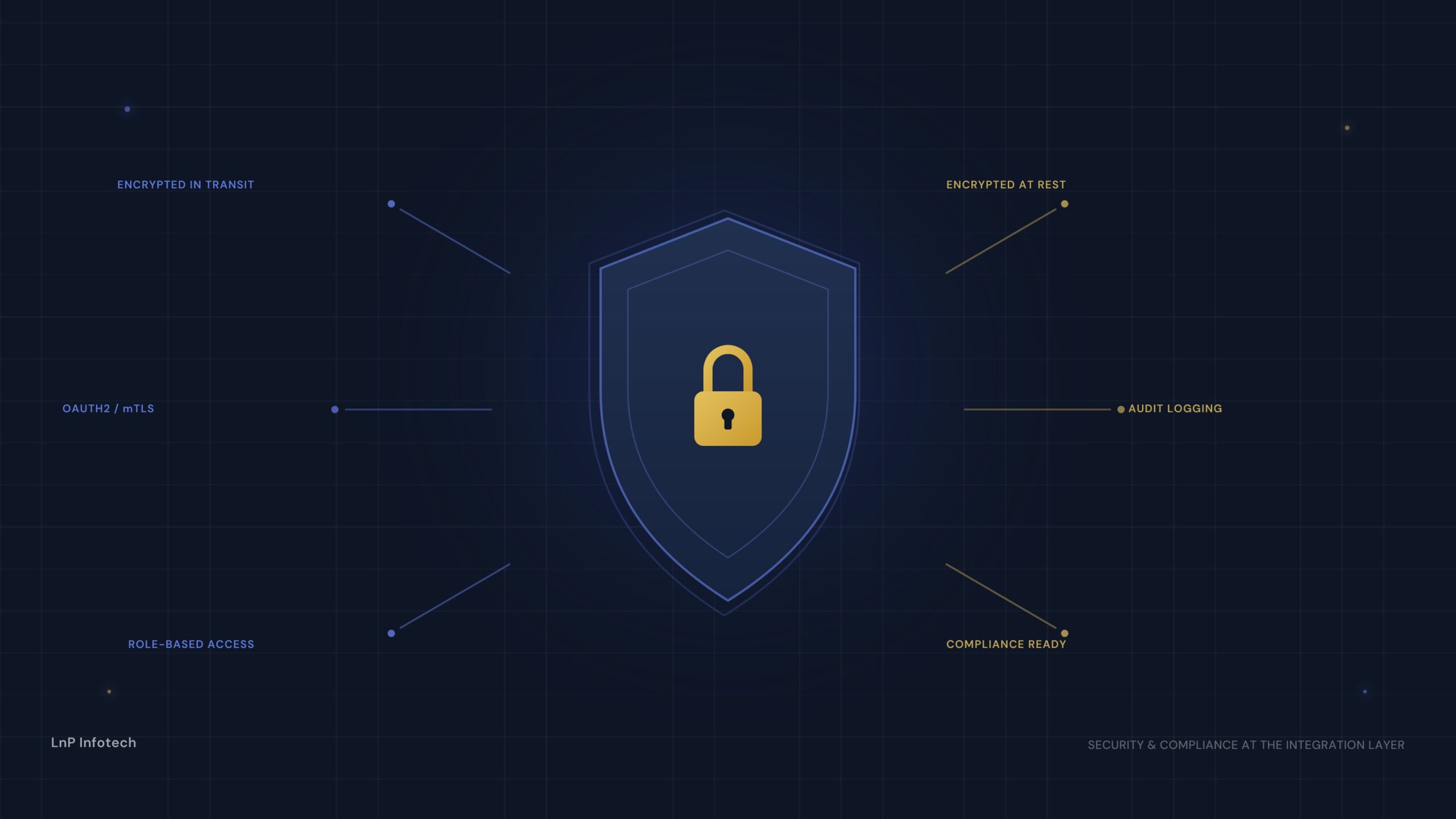
Security isn’t optional here core banking systems hold the data regulators care most about, so every integration point needs encryption in transit and at rest, strong authentication like OAuth2 or mutual TLS, and logging detailed enough to survive an audit.
And scale matters more than people expect going in. A loan campaign or a seasonal spike can throw a sudden burst of volume at the integration layer, and if it wasn’t built to absorb that, requests start timing out right when the business needs them most.
What Does a Well-Architected Integration Look Like?
A resilient setup usually has a few things in common: a clearly defined API contract or file spec that both teams agree on and version properly, so a change on one side doesn’t quietly break the other; a middleware layer that decouples the two systems enough to let them evolve independently; idempotent transaction handling, so a retried request after a timeout doesn’t create a duplicate account or double-disburse a loan; real-time monitoring that actually alerts someone when a transaction fails instead of it sitting unnoticed in a log; and a scheduled reconciliation process that compares records on both sides and catches drift before it turns into a real problem.
How Does AI Fit Into This Integration Layer?
AI’s role here isn’t to replace the integration it’s to make the handoff more reliable. The most useful applications right now are fairly practical: pulling structured fields like loan amount, maturity date, and borrower details out of documents before they get pushed into the core system, so nobody’s keying that data in by hand; catching mismatches between what the LOS sends and what the core system expects before a transaction fails downstream instead of after; and spotting patterns in failed or delayed transactions so integration problems get fixed before they pile up into a backlog.
It’s the same thinking behind the AI-powered validation work we’ve done on the loan agreement side apply that same scrutiny to the data flowing into core banking, not just the documents feeding the LOS.
What Should You Ask Before Building or Upgrading This Integration?
Before any of this gets built, it’s worth getting straight answers to a few questions:
- Can our core banking platform actually do real-time APIs, or are we stuck with batch and file exchange whether we like it or not?
- What’s the longest gap we can live with between approval and account activation?
- What happens when part of a transaction succeeds and part fails say, the customer record syncs but the disbursement instruction doesn’t?
- Who actually owns the data mapping rules, and how are changes to them tracked?
- What does our audit trail need to look like to satisfy whoever’s checking our compliance?
Skipping these upfront is usually how projects end up redoing months of work halfway through.
The Takeaway
None of this is visible to the customer. They don’t see the API contract or the reconciliation job that runs at 2am. What they see is whether their loan shows up in their account when it’s supposed to, and whether the numbers are right when it does.
That’s really what this integration is for. Get the architecture right pick the pattern that actually fits your core system, build in real monitoring, don’t skip reconciliation and lending operations scale the way they’re supposed to. Bolt it together without much thought, and you end up with an operations team quietly patching the gap by hand, which works fine until it doesn’t.
If you’re working through this for your own platform, we’re happy to talk it through including what your current core banking setup can actually support and where to go from there.